Crypto, explained properly.
A growing library of evergreen guides. Reviewed by editors, dated for freshness, written for readers who want to actually understand — not be hyped.
 Guide
What is a MiCA-compliant stablecoin? The EU’s rules, explained
Under MiCA, a stablecoin offered in the EU needs an authorised issuer, full reserves and redemption at par. Here's what that means for you.
By Begoña Iriondo, 7 min readGuideWhat is a quantum attack on bitcoin? Exposed keys, explained8 min read GuideWhat are tokenized stocks? How on-chain shares work and what you own8 min read
 GuideWhat are crypto liquidations? How leverage can wipe out a trade6 min read
 GuideWhat is a crypto custodian? How custody works, and who holds your keys7 min read
 GuideWhat is DeFi lending? How crypto loans work without a bank6 min read
 GuideWhat is MiCA? The EU’s crypto rulebook, explained7 min read
 GuideWhat is a dollar stablecoin? Pegs, reserves and risks7 min read
 GuideWhat do rising bond yields mean for bitcoin? A plain guide5 min read
 GuideWhat is a moving average? How traders smooth out crypto prices6 min read
 GuideWhat is a private key? The secret number that controls your crypto7 min read
 GuideWhat is a spot Bitcoin ETF? How it works and what to watch8 min read
 SecurityCrypto Wallet Security: A Practical Guide to Protecting Your Assets11 min read
 DeFiWhat is DeFi? Decentralized Finance Explained10 min read
 WalletsHot vs Cold Wallets: Choosing the Right Crypto Storage8 min read
 BeginnerHow to Buy Bitcoin: A Step-by-Step Guide for Beginners10 min read
 EthereumWhat is Ethereum? Smart Contracts and the World Computer9 min read
 BitcoinWhat is Bitcoin? A Beginner’s Complete Guide8 min read

GuideWhat are tokenized stocks? How on-chain shares work and what you own8 min readGuideWhat are crypto liquidations? How leverage can wipe out a trade6 min readGuideWhat is a crypto custodian? How custody works, and who holds your keys7 min readGuideWhat is DeFi lending? How crypto loans work without a bank6 min readGuideWhat is MiCA? The EU’s crypto rulebook, explained7 min readGuideWhat is a dollar stablecoin? Pegs, reserves and risks7 min readGuideWhat do rising bond yields mean for bitcoin? A plain guide5 min readGuideWhat is a moving average? How traders smooth out crypto prices6 min readGuideWhat is a private key? The secret number that controls your crypto7 min readGuideWhat is a spot Bitcoin ETF? How it works and what to watch8 min readSecurityCrypto Wallet Security: A Practical Guide to Protecting Your Assets11 min readDeFiWhat is DeFi? Decentralized Finance Explained10 min readWalletsHot vs Cold Wallets: Choosing the Right Crypto Storage8 min readBeginnerHow to Buy Bitcoin: A Step-by-Step Guide for Beginners10 min readEthereumWhat is Ethereum? Smart Contracts and the World Computer9 min readBitcoinWhat is Bitcoin? A Beginner’s Complete Guide8 min readExplore the library
 GuideWhat is a MiCA-compliant stablecoin? The EU’s rules, explainedUnder MiCA, a stablecoin offered in the EU needs an authorised issuer, full reserves and redemption at par. Here's what that means for you.
 GuideWhat is a quantum attack on bitcoin? Exposed keys, explainedQuantum computers can't break bitcoin today. Here's what a future attack would target, why some coins are more exposed than others and what you can do.
 GuideWhat are tokenized stocks? How on-chain shares work and what you ownTokenized stocks are crypto tokens that track a company's shares. Some are real shares recorded on a blockchain; many are a separate product that only follows the price. This guide explains the models, the rules in the US and EU, and what can go wrong.
 GuideWhat are crypto liquidations? How leverage can wipe out a tradeCrypto liquidations happen when an exchange automatically closes a trader's leveraged position because losses have eaten through the collateral, or margin, backing it. The trader loses most or all of that margin. Liquidations are why crypto prices sometimes fall or jump much faster than the news alone would suggest.
 GuideWhat is a crypto custodian? How custody works, and who holds your keysA crypto custodian is a company that safeguards the private keys to digital assets on behalf of clients. This guide explains how custody works, who the main types of custodian are, how the rules differ in the US and EU, and what can go wrong.
 GuideWhat is DeFi lending? How crypto loans work without a bankDeFi lending lets you lend and borrow crypto through smart contracts instead of a bank. Borrowers lock up more collateral than they borrow, and anyone can liquidate a loan that becomes unsafe.
 GuideWhat is MiCA? The EU’s crypto rulebook, explainedMiCA is the European Union's Markets in Crypto-Assets Regulation, the law that sets common rules for issuing crypto tokens and for companies that provide crypto services, such as exchanges and custodians, in the EU. Under MiCA, a firm needs a licence to serve EU clients, stablecoin issuers must hold reserves and honour redemptions, and market abuse is banned.
 GuideWhat is a dollar stablecoin? Pegs, reserves and risksDollar stablecoins aim to stay near one US dollar using reserves or other mechanisms. Here is how they work, how major brands differ and what can go wrong.
 GuideWhat do rising bond yields mean for bitcoin? A plain guideBond yields are the interest rates investors earn for lending money through bonds, and the US 10-year Treasury yield is the one crypto traders watch most. When bond yields rise, cash and bonds pay more, borrowing costs more and riskier assets such as bitcoin can come under pressure. But that pressure is one force among many, and it often loses.
 GuideWhat is a moving average? How traders smooth out crypto pricesA moving average is the average of an asset's price over a set number of recent periods, such as the last 20 or 50 days, recalculated every period so the line moves along with the market. Traders use a moving average to smooth out day-to-day noise, see which way a trend is pointing and mark levels where price has tended to pause.
 GuideWhat is a private key? The secret number that controls your cryptoA private key is a secret number that proves you control a crypto address and lets you sign transactions that move the coins held there. Your coins never leave the blockchain; the private key is what gives you the power to move them. Whoever knows the key controls the funds, so keeping it secret is the most important job in crypto security.
 GuideWhat is a spot Bitcoin ETF? How it works and what to watchA spot Bitcoin ETF is a fund that holds bitcoin and lists shares on a traditional stock exchange, letting brokerage accounts gain price exposure without self-custody.
 SecurityCrypto Wallet Security: A Practical Guide to Protecting Your AssetsMost crypto losses aren't from sophisticated hacks — they're from a handful of avoidable mistakes. This guide covers the security fundamentals that protect against 95% of real-world threats.
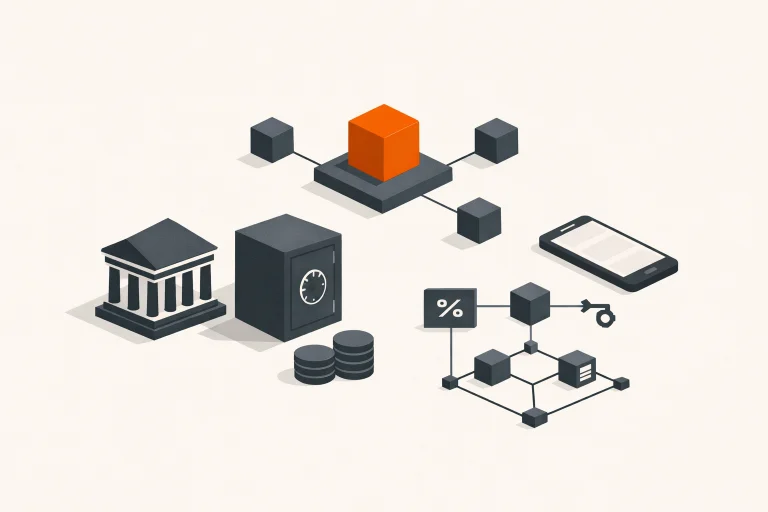 DeFiWhat is DeFi? Decentralized Finance ExplainedDeFi rebuilds traditional financial services — lending, trading, savings — as code that anyone can use without a bank in the middle. Here's what it is, what works, and where the real risks are.
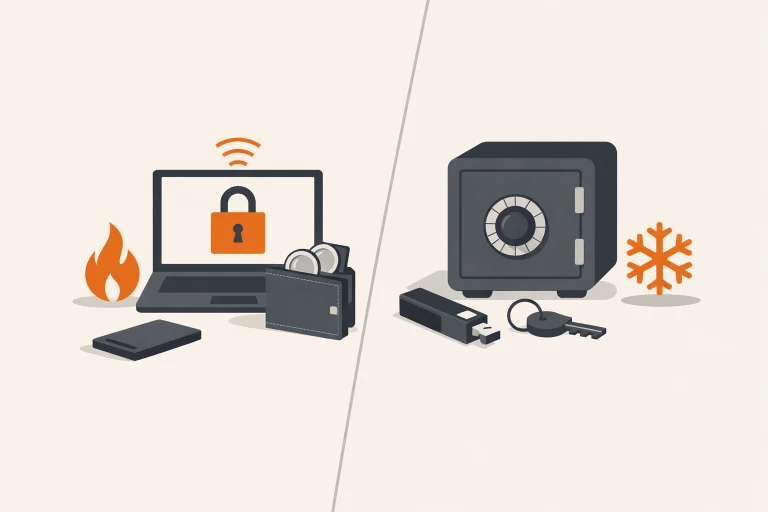 WalletsHot vs Cold Wallets: Choosing the Right Crypto StorageA hot wallet is convenient but online. A cold wallet is offline but slower to use. Understanding which to use, and when, is the single most important security decision you'll make.
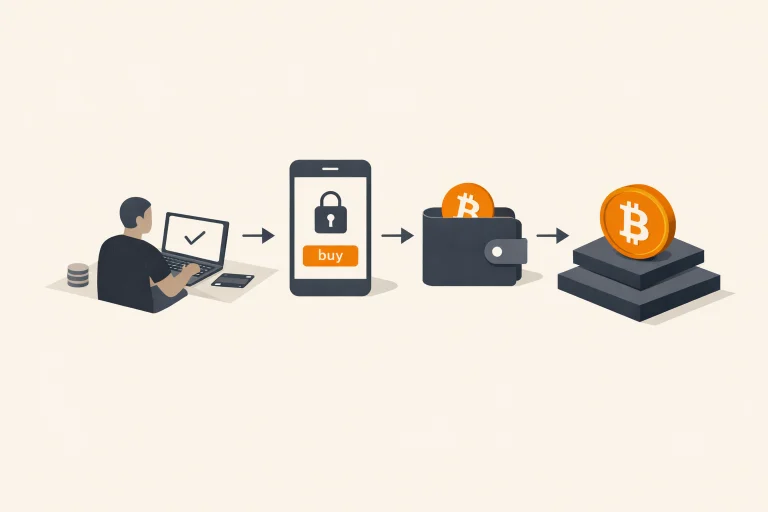 BeginnerHow to Buy Bitcoin: A Step-by-Step Guide for BeginnersBuying your first Bitcoin sounds intimidating, but the process has matured. Here's a practical, modern walkthrough — choosing an exchange, verifying your identity, placing the order, and moving it to a wallet you control.
 EthereumWhat is Ethereum? Smart Contracts and the World ComputerEthereum is more than a cryptocurrency — it's a programmable blockchain that runs decentralized applications, smart contracts, and an entire economy of tokens. Here's what makes it different.
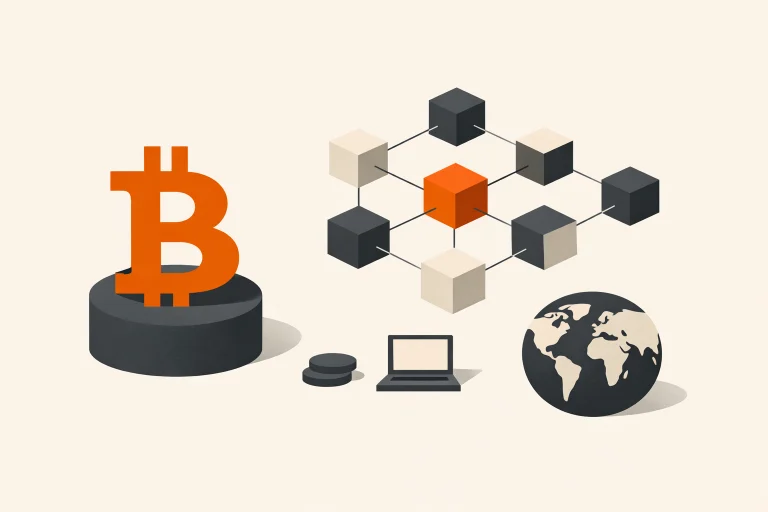 BitcoinWhat is Bitcoin? A Beginner’s Complete GuideEverything you need to know about the world's first cryptocurrency, from blockchain basics to how to buy your first BTC.