

What is Ethereum? Smart Contracts and the World Computer
Ethereum is more than a cryptocurrency — it's a programmable blockchain that runs decentralized applications, smart contracts, and an entire economy of tokens. Here's what makes it different.
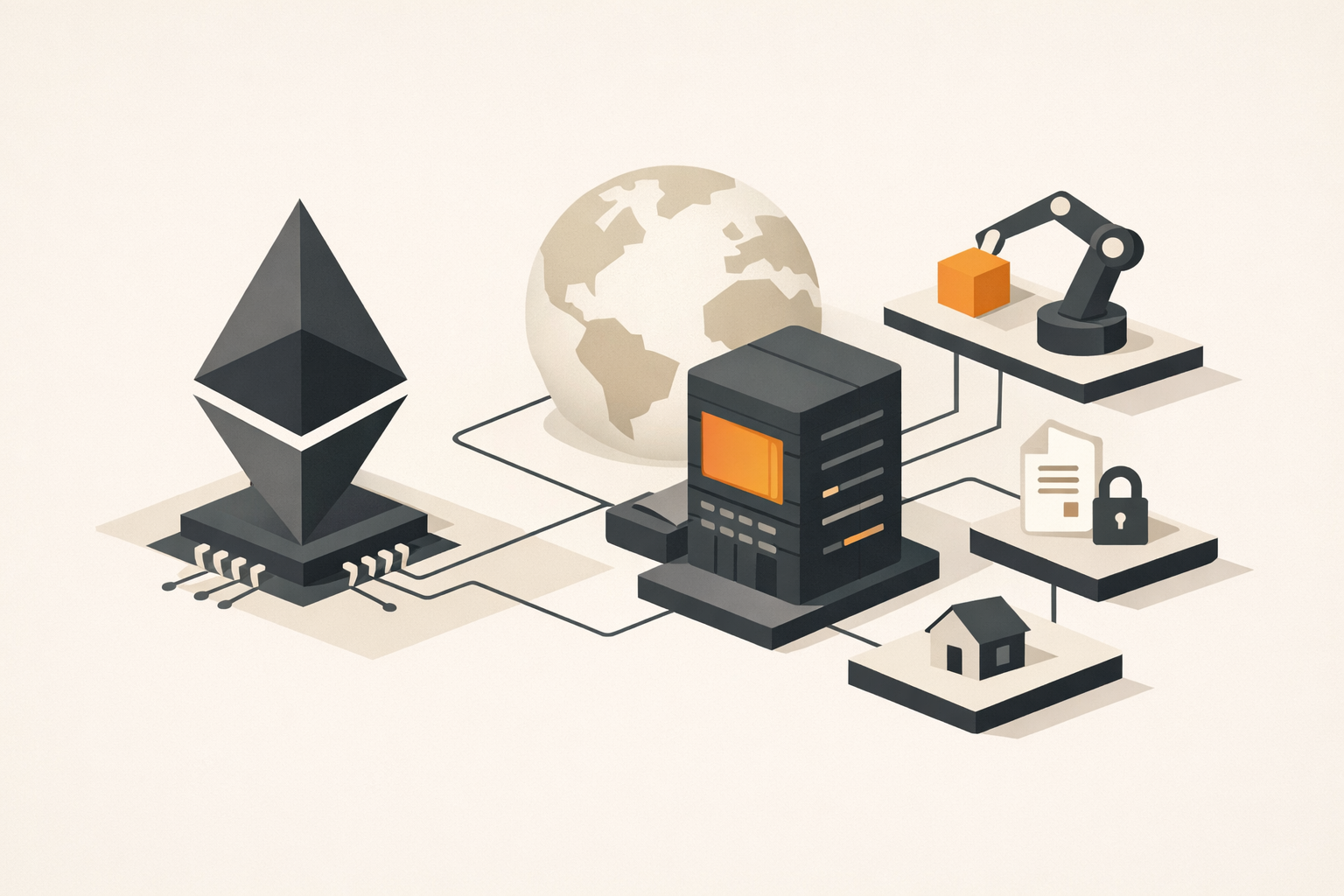
If Bitcoin is digital gold, Ethereum is the digital infrastructure layer beneath it. Launched in 2015 by Vitalik Buterin and a small founding team, Ethereum introduced the idea that a blockchain could do more than track balances — it could execute code. That single shift opened the door to smart contracts, decentralized finance, NFTs, and the broader Web3 movement.
The Core Idea: Programmable Money
Bitcoin's blockchain stores transactions. Ethereum's blockchain stores transactions and programs called smart contracts. A smart contract is just code that lives on the network and runs exactly as written — no servers, no admins, no off-switch. Once deployed, anyone can interact with it by sending a transaction.
This is what makes Ethereum a "world computer": every node on the network independently runs the same code and reaches the same result. The state of the network is shared, verifiable, and tamper-resistant.
Ether (ETH) and Gas Fees
Ether, abbreviated ETH, is the native asset of the Ethereum network. It serves two purposes: it's a store of value like Bitcoin, and it's the fuel that powers computation. Every transaction or contract execution costs gas, paid in ETH, and the price of gas fluctuates with network demand.
Why Gas Exists
Gas is what prevents infinite loops or spam from clogging the network. Each operation has a fixed gas cost, and you pay upfront. If your transaction runs out of gas, it reverts, but the gas you spent is gone — a small but important deterrent.
Smart Contracts in Practice
Most of what makes crypto interesting today runs on smart contracts:
- Decentralized exchanges like Uniswap let you trade tokens without an intermediary.
- Lending protocols like Aave let you borrow against collateral with no credit check.
- NFT marketplaces like OpenSea use contracts to track ownership of unique digital items.
- Stablecoins like USDC and DAI are issued and redeemed via contract logic.
If you can describe a financial agreement in plain language, you can probably express it as a smart contract — and once deployed, it runs without anyone's permission.
Proof-of-Stake and the Merge
Ethereum originally used proof-of-work (like Bitcoin), but in September 2022 it transitioned to proof-of-stake in an event called The Merge. Instead of miners burning electricity, validators lock up ETH as collateral and earn rewards for honest participation. The change cut Ethereum's energy consumption by roughly 99.95%.
Layer 2: Scaling Beyond the Base Layer
Ethereum's main chain is secure but slow and expensive. Layer-2 networks like Arbitrum, Optimism, and Base process transactions off-chain and post compressed proofs back to Ethereum. The result: lower fees, faster confirmations, same security guarantees.
Should You Care?
Even if you never write a line of Solidity, Ethereum's influence touches almost every corner of crypto. Stablecoins, DeFi, governance tokens, and most active blockchain ecosystems either run on Ethereum or borrow its design. Understanding Ethereum is understanding the architecture that most of crypto is built on.