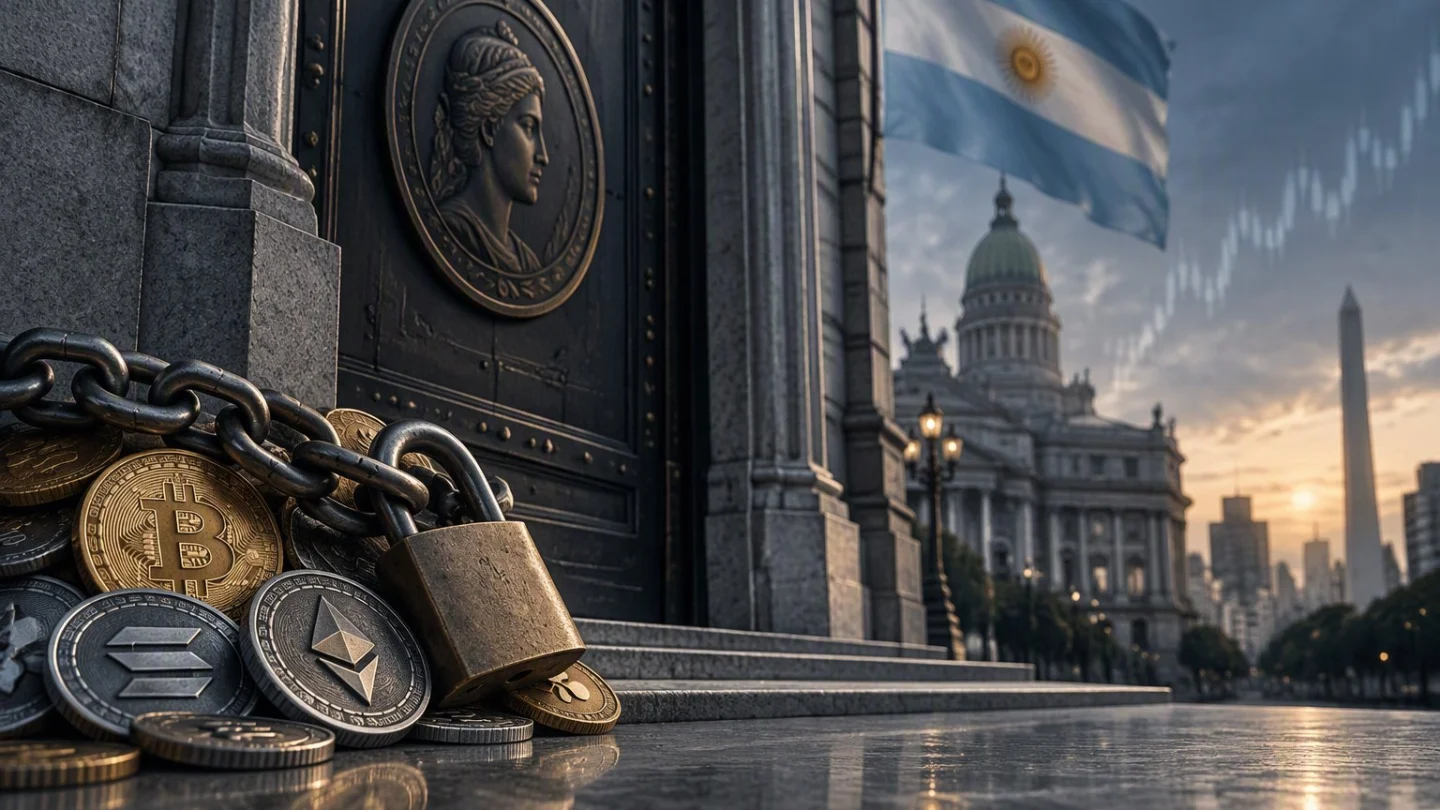
Juan Curutchet was about to leave the stage at a payments conference when he raised crypto without being asked. The BCRA’s superintendent of financial and foreign-exchange institutions told the Pulso 2026 event on 7 October that crypto would not move this year, La Nación reported that day. English-language crypto outlets picked it up on Sunday.
“This year nothing is going to happen. But I do see it as possible in a second Milei presidency.”
Juan Curutchet, BCRA superintendent, at Pulso 2026 (our translation of La Nación’s report)
La Nación wrote that the bank does not expect any change this year or next. Curutchet gave no detail on whether the ban could be lifted or on what other measures might be considered, the paper reported. He left it as a “pending agenda for later”, in a country where, in his words, the perception of fragility would have to fall “significantly” and economic freedom be complete.
The ban in question dates to May 2022, TokenPost reports: regulated financial institutions may not offer crypto assets to customers, directly or indirectly. A central bank notice of 4 May 2023 added that payment-service providers with payment accounts may not carry out or facilitate transactions in digital assets unless they are regulated or authorized, TokenPost says. We have not read the central bank texts.
Compared with what?
In 2022, La Nación recalled, Banco Galicia and Brubank announced services to buy, sell and hold crypto, and the central bank published a rule that stopped the launch in under 48 hours. This time the regulator is describing a timetable of years, and no rule, date or list of eligible assets exists. Brazil, by contrast, has put dates on its own regime: a 6 November date after which banks must stop serving non-compliant crypto firms.
The ban covers banks and some payment providers, not every route to crypto in Argentina. Argentine outlet iProUP reports that fintech groups are positioning separate entities for crypto services, and Bitcoin.com News notes that banking groups are building stablecoin projects through separate companies. We read iProUP through a search extract only.
Risks: Curutchet’s remarks are an opinion about a possible future, tied to an election outcome and to a stability test the bank has not defined. Nothing in them changes what a bank customer can do today. People who want crypto today still deal with platforms outside the banks, where custody and counterparty risk stays with the user.
What to watch: any central bank circular on banks and digital assets, and whether the payment-provider rules of 2023 are revisited.
This article is for information only and is not investment advice.