SECURITY ALERT
The wallet is safe.
The address on the parcel is not.
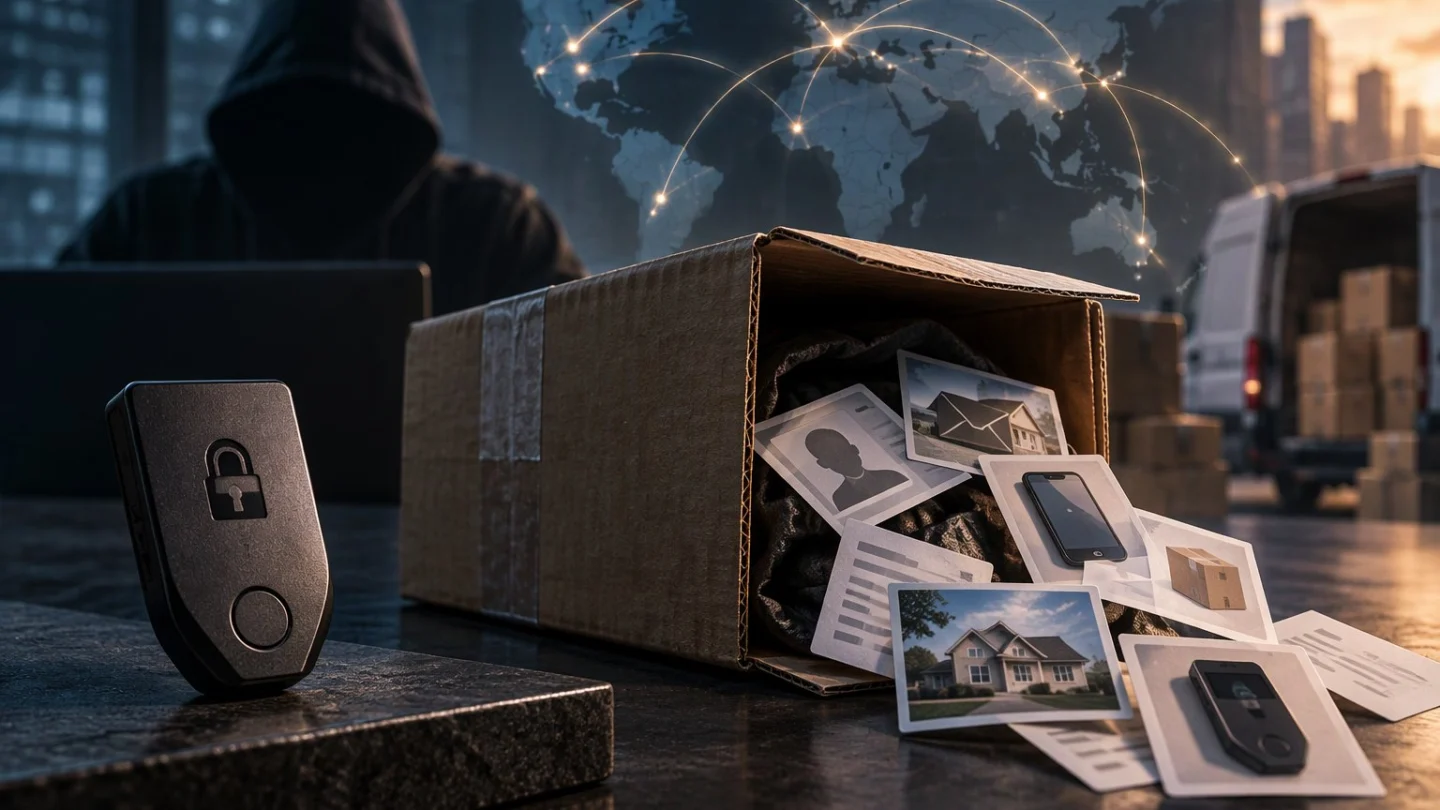
Hardware-wallet maker Trezor says an attacker exported customer shipping data for about 27,000 orders from its delivery partner Skladon, according to a post on Trezor’s blog dated 16 Nov.
The orders date from 9 August to 7 November 2026.
Skladon told Trezor on 15 November that someone had accessed its systems without authorisation. The breach itself took place on 7 November, Trezor says.
An investigation is ongoing.
What leaked, and what did not
Trezor lists the exposed data as full names, phone numbers, delivery addresses, email addresses and order details. Its FAQ adds the product name and the price paid.
Billing information was not part of it, the company said in a reply on X.
“Trezor systems were not compromised, and your device is secure,” the post says.
No recovery phrases, PINs or passphrases were involved. Trezor says neither it nor Skladon ever holds them.
That is the good news. The bad news is the combination.
A name, a home address, a phone number and proof of a hardware-wallet purchase is exactly the list a scammer, or a robber, would want. Trezor’s own warning says so: “Please be alert to potential risks to your physical security.”
So who is already using the list?
The calls have started
Trezor says some customers have already reported scam calls.
Its warning is that scammers may cite genuine order details, down to the product and the price, to sound convincing. It says nobody from Trezor will phone out of the blue or request a wallet backup.
Trezor says it has emailed every affected customer it can still reach. A small number of buyers from 9 to 14 August could also be in the file but cannot be emailed, because their details had already been anonymised under the company’s 90-day retention policy. It is reaching them through its blog and X.
It has also informed the data protection authority. It did not say which one.
If the stolen file holds a real order, how does a buyer tell a real Trezor email from a fake one?
The record so far
- August 2026. A breach at another Trezor shipping partner, ShipMonk, exposed details of about 13,700 customers across seven countries, The Block reported.
- 30 Oct. Trezor warns CryptoBilis buyers about an implanted Safe 5, in its first CryptoBilis warning.
- 7 Nov. The Skladon breach takes place, Trezor says.
- 12 Nov. Trezor confirms three implanted devices; see Trezor’s CryptoBilis implant findings.
- 15 Nov. Skladon notifies Trezor.
- 16 Nov. Trezor discloses the breach and emails customers.
“We know this is not the first time customer contact details and addresses have been exposed in an incident involving one of our partners,” Trezor wrote.
What Trezor is changing
From 16 November, buyers in 18 European countries can choose anonymous pickup, collecting from a parcel locker or pickup point so that their name and home address never reach Trezor, the company says. It says it is working on the same option for the US.
It is cutting how long it keeps order data from 90 days to 45. It says it is also reviewing its third-party partners and the security rules it sets for them.
Shorter retention would have shrunk this file. It would not have emptied it.
Protect yourself
- If you ordered a Trezor between 9 August and 7 November 2026, assume your name, address, phone number and order are in someone else’s hands.
- Treat any unexpected call, text, email or letter about your order as suspicious, even if it quotes the right product and price. Contact Trezor only through trezor.io/support.
- Never type your recovery phrase anywhere except on the device itself. No support agent needs it, which is why the recovery phrase is the master key.
- Be careful who knows you hold crypto. If a message threatens you or makes you feel unsafe, Trezor says to contact local police first.
- For future orders, a pickup point keeps your home address off the shipping label.
Two shipping partners. Two leaks in four months. Roughly 27,000 orders this time and 13,700 customers last time.
If the device is built to keep secrets, why does buying one still leave such a long paper trail?
Corrections and new evidence: [email protected]
This article is for information only and is not investment advice.