At a glance
- Phantom has started rolling out Kalshi’s prediction markets to US users of its mobile wallet, with access widening over the coming weeks, The Block reported on Friday.
- Each contract carries a $0.02 fee, split evenly between Phantom and Kalshi, plus a variable network fee, according to Phantom’s help centre.
A self-custody crypto wallet is now a front end for a federally regulated exchange. The states that are suing Kalshi have not gone away.
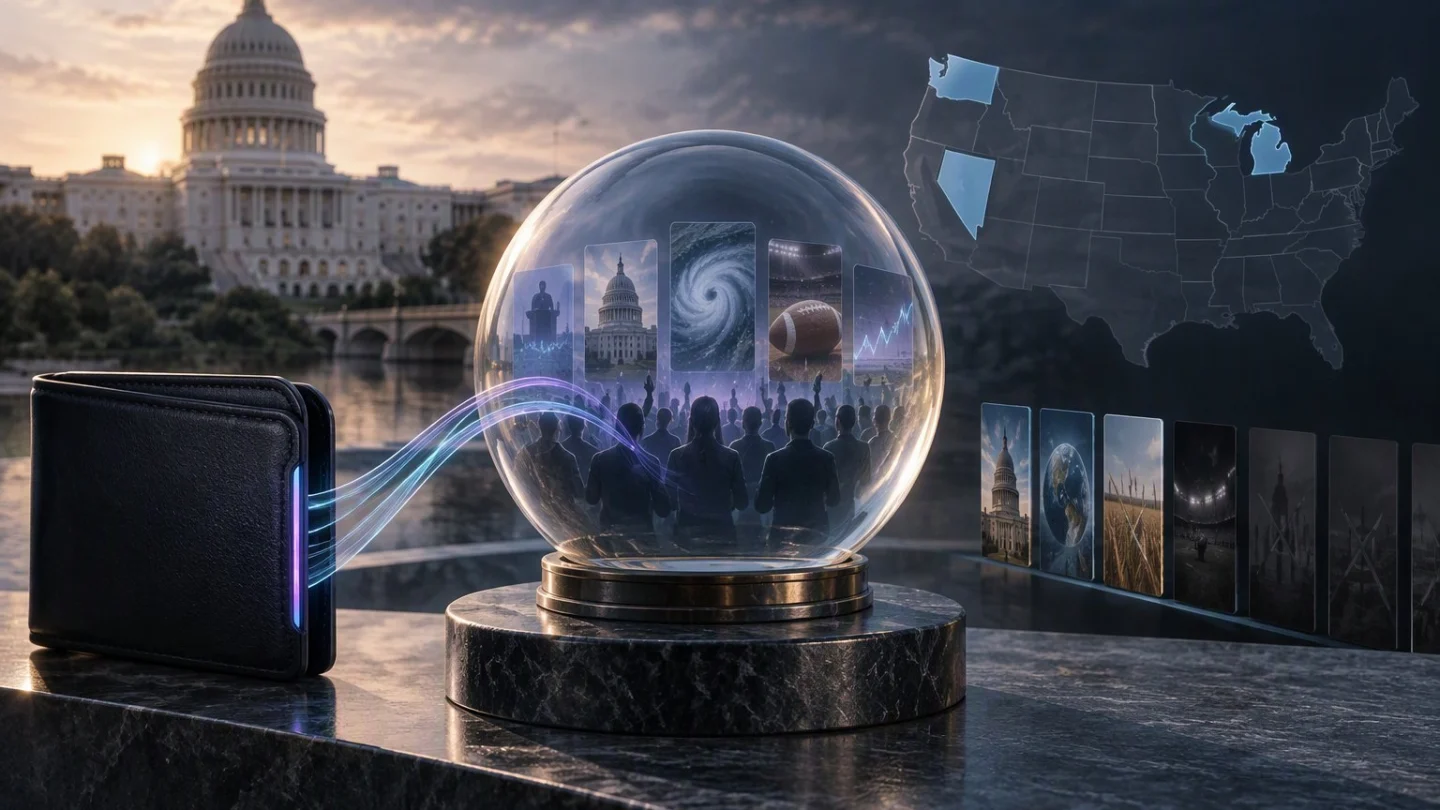
Phantom, one of the most widely used Solana wallets, added a Predict tab where US users can browse markets on sports, politics, economics and culture. In the US the markets are offered through Kalshi, which Phantom describes as “a US-regulated exchange.”
How it works
Users must verify their identity with Kalshi first. Phantom’s verification page asks for a legal name, date of birth, home address, Social Security number, a US phone number and an ID document.
Trades can be paid from a Phantom Cash balance or with any token on Solana. Trades funded from Cash are gasless. When a user buys, funds move to Kalshi; sale proceeds and winnings come back to the Cash account through Stripe, Phantom says.
Put simply, each contract pays $1 if the outcome happens and nothing if it does not, so a price of 60 cents means the market puts the chance at about 60%.
The fee is easy to model. Ten contracts cost $0.20 in prediction fees: $0.10 to Phantom and $0.10 to Kalshi, per Phantom’s own example. Kalshi, not Phantom, decides how markets resolve.
Phantom also warns that cashing out early needs a buyer on the other side. In a thin market, a position can show a profit and still be hard to sell.
The state map
The rollout is not uniform. According to The Block, Michigan users will not see sports markets.
In Nevada, sports, elections, politics and entertainment markets are blocked. Washington users lose those categories plus culture, science and technology, “mentions” and geopolitics.
Those carve-outs track the fight over who regulates event contracts. Kalshi argues that its markets fall under the Commodity Futures Trading Commission (CFTC), not state gambling law. Several states disagree; this week CryptoWatchDesk covered Utah’s lawsuit against Kalshi and Susquehanna.
Phantom’s general counsel, Kevin Jacobs, told The Block that “the CFTC’s jurisdiction here is clear.” Kalshi’s Max Crowley told the outlet that Kalshi supplies the full market catalogue to Phantom, and declined to comment on the state cases.
What to watch
The legal question sits with the courts, including the dispute that drew the NFL’s amicus brief in the Kalshi Supreme Court case. A ruling against Kalshi’s federal-preemption argument would shrink the menu inside every app that resells its markets, Phantom included.
Distribution is the other story. Wallets and brokers are lining up to plug into regulated event-contract venues, as Blockchain.com’s CFTC filings for prediction markets showed. Phantom has not said how many users have access so far.
This article is for information only and is not investment advice.