At a glance
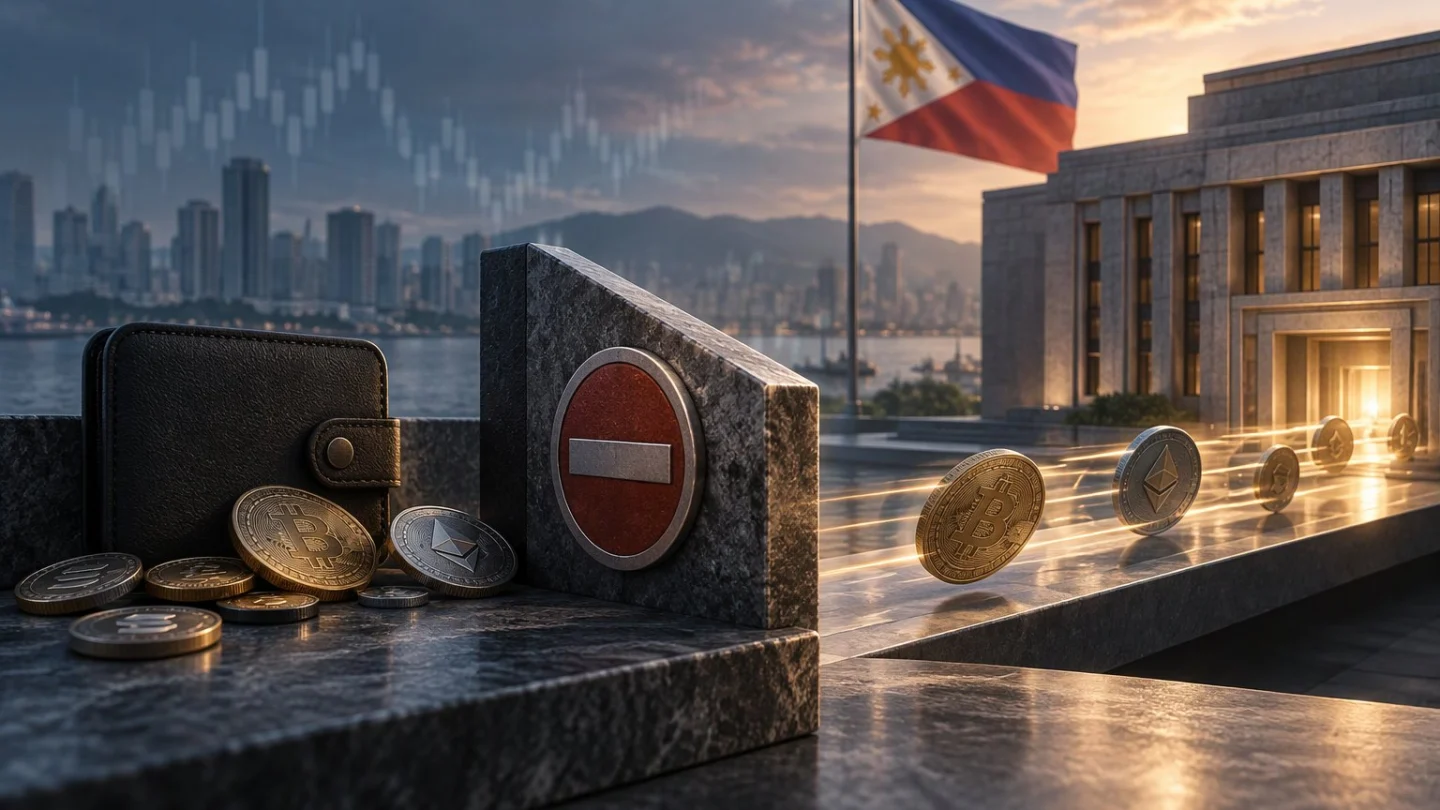
- Coins.ph says that from 19 Nov users can send crypto to, and receive it from, only accounts at other regulated exchanges, according to its help centre.
- “Self-custody wallets are no longer supported,” the page says. It cites the travel rule of the Bangko Sentral ng Pilipinas (BSP), the Philippine central bank.
- Every external transfer now needs sender or recipient details, whatever the amount.
The page, last updated on 21 Nov at 08:56 UTC, applies to all Coins.ph users. A self-custody wallet is one where the user holds the keys, rather than an exchange. “If you don’t send or receive crypto outside Coins.ph, this change will not affect you,” it says.
Under the travel rule, a regulated platform has to know who is on each end of a crypto transfer. The page cites BSP Circular 1108 of 2021, which governs virtual asset service providers (VASPs), the BSP’s term for crypto exchanges and similar firms, and Memorandum M-2023-042 of December 2023, which the page says clarifies how the rule applies to them.
What users now have to provide
For a withdrawal, Coins.ph asks for the recipient’s name, wallet address, destination wallet type, destination exchange platform and the purpose of the transfer. For a deposit, it asks for the sender’s name, address, wallet address, source wallet type, source exchange platform and purpose.
“The same details are required for every external transfer, whatever the amount,” the page says. Incoming coins are held until Coins.ph has checked who sent them, and outgoing ones leave only once the recipient’s details pass its checks. Its API deposit and withdrawal endpoints also changed on 19 Nov, it says.
BitPinas, a Philippine crypto outlet, reported that withdrawals to self-custody wallets will fail and that deposits from them will be returned to the sender, minus network fees. That detail is not on the help page we read.
What the page does not say
The page does not list which exchanges Coins.ph counts as regulated, or say whether foreign platforms qualify. It gives no reason for the change beyond the BSP rule.
We found no statement from the BSP on the change. Coins.ph has not published a separate announcement beyond the help page, as far as we found.
This is not the first BSP curb on the app this autumn: in early October the central bank partially suspended DCPay Philippines, the e-money operator behind Coins.ph, from receiving inbound bank transfers, BitPinas reported, as we noted in Asia Ten on 4 Oct. Elsewhere, US regulators this month FinCEN and the Fed withdrew their $250 travel-rule threshold proposal.
Why it matters: a user who keeps coins in a personal wallet can no longer move them in or out of Coins.ph directly. Anyone with a transfer in flight should check the app first. New to self-custody? Read what a private key is.
This article is for information only and is not investment advice.