SECURITY ALERT · FOLLOW-UP
Nobody else bought the tokens. That was the point.
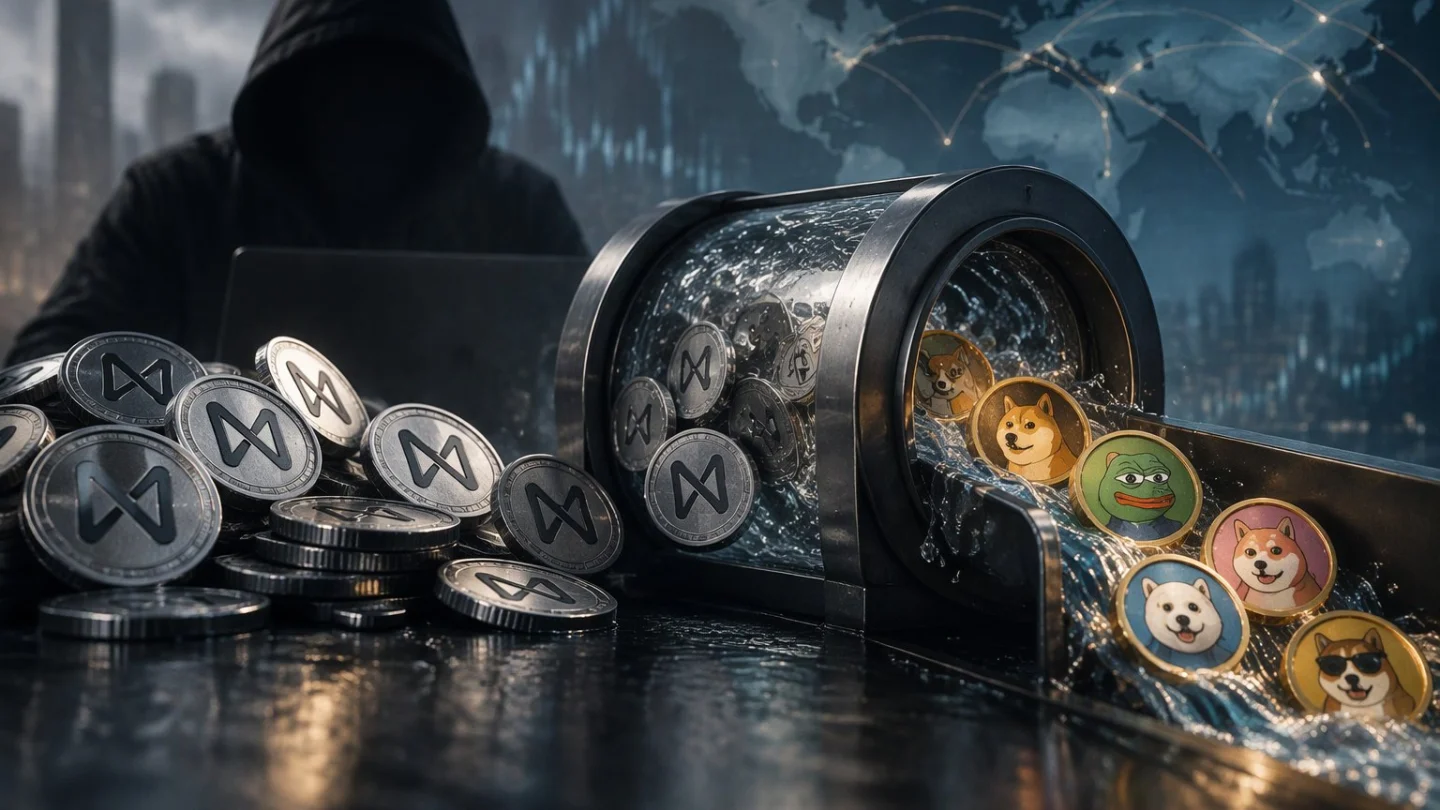
The people laundering the Binance hack created at least six memecoins on the NEAR blockchain between 5 and 7 Nov and traded them only with themselves, moving about 117,000 stolen NEAR, roughly $430,000, through decentralised exchange pools, blockchain analytics firm Elliptic said on Monday.
The FBI has attributed the 29 Oct theft to North Korea’s TraderTraitor group; see the FBI’s attribution of the theft to North Korea’s TraderTraitor.
The amount is small. The method is cheap.
Elliptic’s own summary is blunt: the trick slows investigators down rather than hiding the funds.
Six tokens, three days
All times are Elliptic’s.
- 00:25 UTC, 5 Nov. The first token appears, under a crude three-letter ticker.
- 07:19 to 14:27 UTC, 6 Nov. Four more follow: OLCCL, MEILI, MMLI and DABI.
- 10:06 UTC, 7 Nov. The sixth, SINU, borrows the “-inu” suffix of dog-themed coins.
- 8 Nov. None of the six trades again. That afternoon, the creators of four of them withdraw what is left in their pools.
Each token cost about 25 NEAR, or some $90, to create.
One token’s logo shows Elon Musk beneath an “Elon 2028 President” banner. Elliptic stresses that nothing suggests he is connected to it.
So how does a joke coin wash money?
The trick
Each token was paired with NEAR in its own liquidity pool, the shared pot on a decentralised exchange where anyone can swap one asset for another.
One group of wallets paid stolen NEAR in and took the new token out. A different group sold that token back to the pool and pulled NEAR out.
The pool sat in the middle. The stolen coins never travelled straight from a buyer to a collector.
To a casual observer, the collectors look like traders who sold a memecoin at a profit.
“The launderers made six of these crypto tokens, and traded them only with themselves,” Elliptic co-founder Tom Robinson told CoinDesk.
How sure is Elliptic that these were laundering tools, and not just bad bets?
The evidence
Elliptic lists three signs.
Every sale of all six tokens, and every purchase of five of them, came from wallets in the laundering network. Outsiders made up less than 1% of the volume of one token. Three, DABI, MMLI and SINU, had exactly one buyer and one seller each.
Five of the six creators received their funding from a wallet that was selling a previous token, 2 to 13 minutes before each launch. The tokens form a chain: one pays for the next.
In every case, NEAR in equalled NEAR out. Much of it was then swapped into stablecoins or sent over a cross-chain bridge.
The trail is public. It is just longer.
Where does this sit in the wider laundering?
The bigger picture
The NEAR tokens are the clearest case, but not the first. Elliptic says it spotted a worthless token created on Tron for the same purpose on 2 Nov, and stolen SOL being routed through thinly traded existing tokens on Solana on 3 Nov.
It first reported the method after the 2025 Bybit hack, when at least $24 million moved this way.
About 11.8 million NEAR, some $43.7 million, from the Binance theft has still not moved, Elliptic said. For the rest of the trail, see Elliptic’s tally of the bitcoin converted from other stolen assets and our Post-Mortem of the Binance hack.
NEAR traded at $3.62 on Kraken at 20:48 UTC.
What compliance teams can check
- A deposit that came out of a liquidity pool is not clean by default. Check what was paid into the pool, not only which wallet paid out.
- Flag tokens created in the last few days, and pools where only a handful of wallets trade.
- Watch for wallets that only buy a token while others only sell it, especially new wallets funded just before trading.
- Re-screen deposits already accepted as Elliptic’s public Binance hack blocklist grows.
A token costs $90. A trace costs hours. Who wins that race at scale?
Corrections and new evidence: [email protected]
This article is for information only and is not investment advice.