



Yesterday's FOMC meeting went as expected, with Chair Jerome Powell leaving rates unchanged.
Bitcoin's dip from $77K to $76K within 24 hours was also expected. The key price level to watch is $78,197. This is the critical point bulls need to reclaim. Bitcoin briefly pushed above this earlier in the week, but couldn't hold on and quickly dropped back down. Right now, BTC is stuck in the middle zone between two important trend lines. For the short-term outlook to turn clearly positive again, Bitcoin needs to climb back above $77,452 and stay there. On the flip side, if the price falls below the $75,000 mark, we could see a more significant drop.
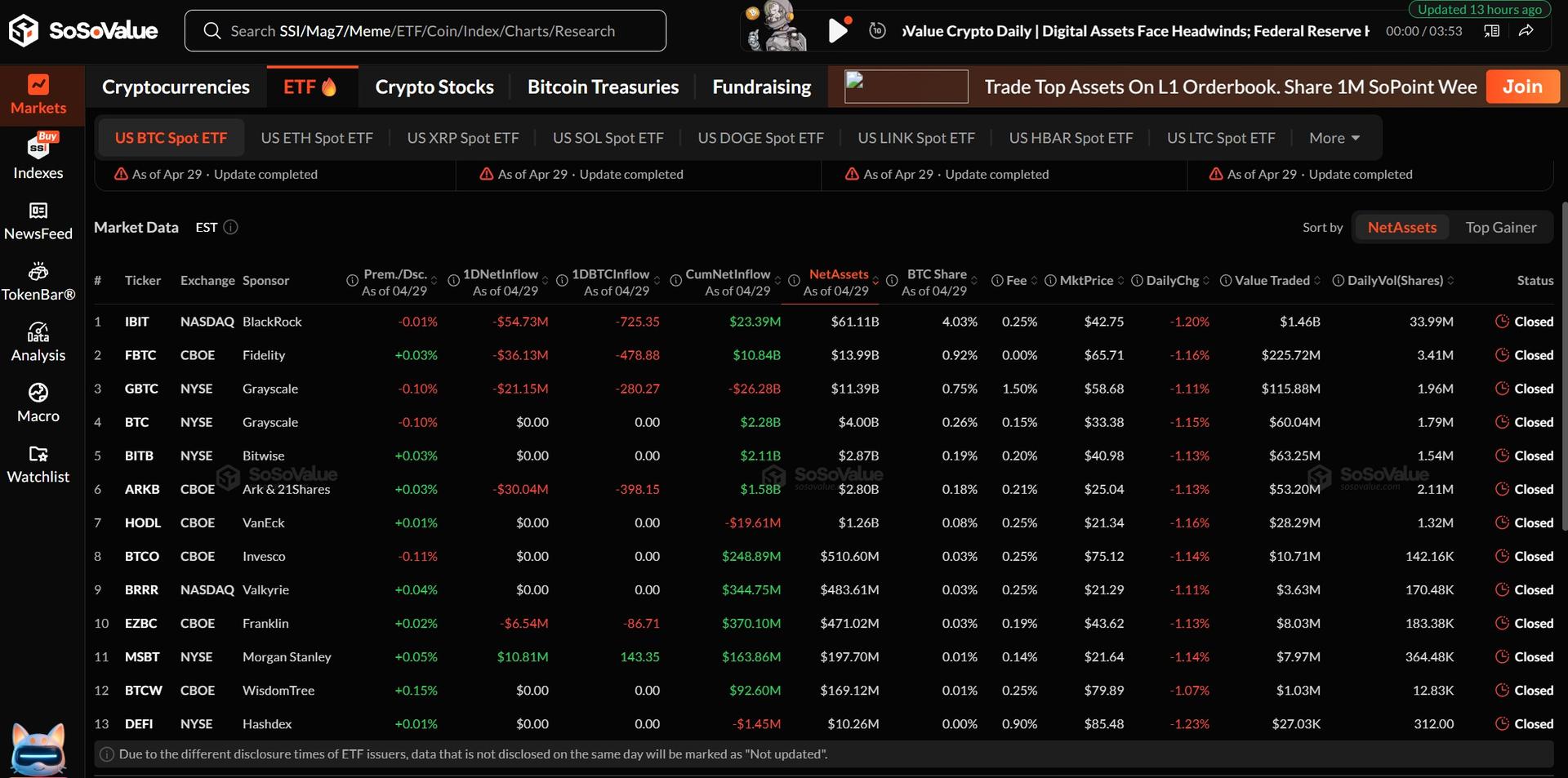
Importantly, US spot Bitcoin ETFs recorded $2.44 billion in net inflows during April 2026, the highest since October 2025, reversing four months of outflows and propelling Bitcoin to $77,000 amid surging institutional demand.
Despite the cautious April finish, historical data and technical signals suggest May could deliver bullish momentum, with US-listed spot Bitcoin ETFs attracting $1.8 billion in net inflows during April alone.
May is consistently A positive month for Bitcoin
Historical data since 2013 shows May as a consistently positive month for Bitcoin, delivering gains in seven of 13 years with average returns around 8%. While more modest than October's 29.88% or November's 37.51% historical averages, this seasonal bias provides a tailwind following April's strong performance.
Technical indicators reinforce the bullish case. As of 30 April 2026, Bitcoin's 50-day moving average is poised to cross above the 100-day average, a classic bullish signal indicating strengthening short-term momentum. This crossover coincides with the S&P 500 hovering near record highs, supporting the broader risk-on environment.
Institutional Demand Reshapes Market Dynamics
The standout development is surging institutional appetite. US-listed spot Bitcoin ETFs recorded $1.8 billion in net inflows during April 2026, following $1.32 billion in March, totaling over $3.1 billion across two months. This sustained demand marks a departure from the past's retail-driven cycles, where speculative frenzies preceded sharp corrections.
The 2024 halving, which occurred in spring and reduced mining rewards, broke historical patterns when Bitcoin surpassed its 2021 all-time high of approximately $69,000 before the event, reaching around $73,000 in March 2024. Unlike previous cycles, no major crash materialized in the 18 months following the halving through late 2025, challenging the traditional four-year boom-bust cycle theory.
Rising bond yields remain the primary near-term risk, as higher yields on safer assets increase the opportunity cost of holding non-yielding cryptocurrencies like Bitcoin. If yields continue climbing, they could cap the rally and trigger short-term pullbacks, potentially offsetting seasonal tailwinds.
Additionally, the cryptocurrency market's maturation means historical patterns may not repeat exactly.