


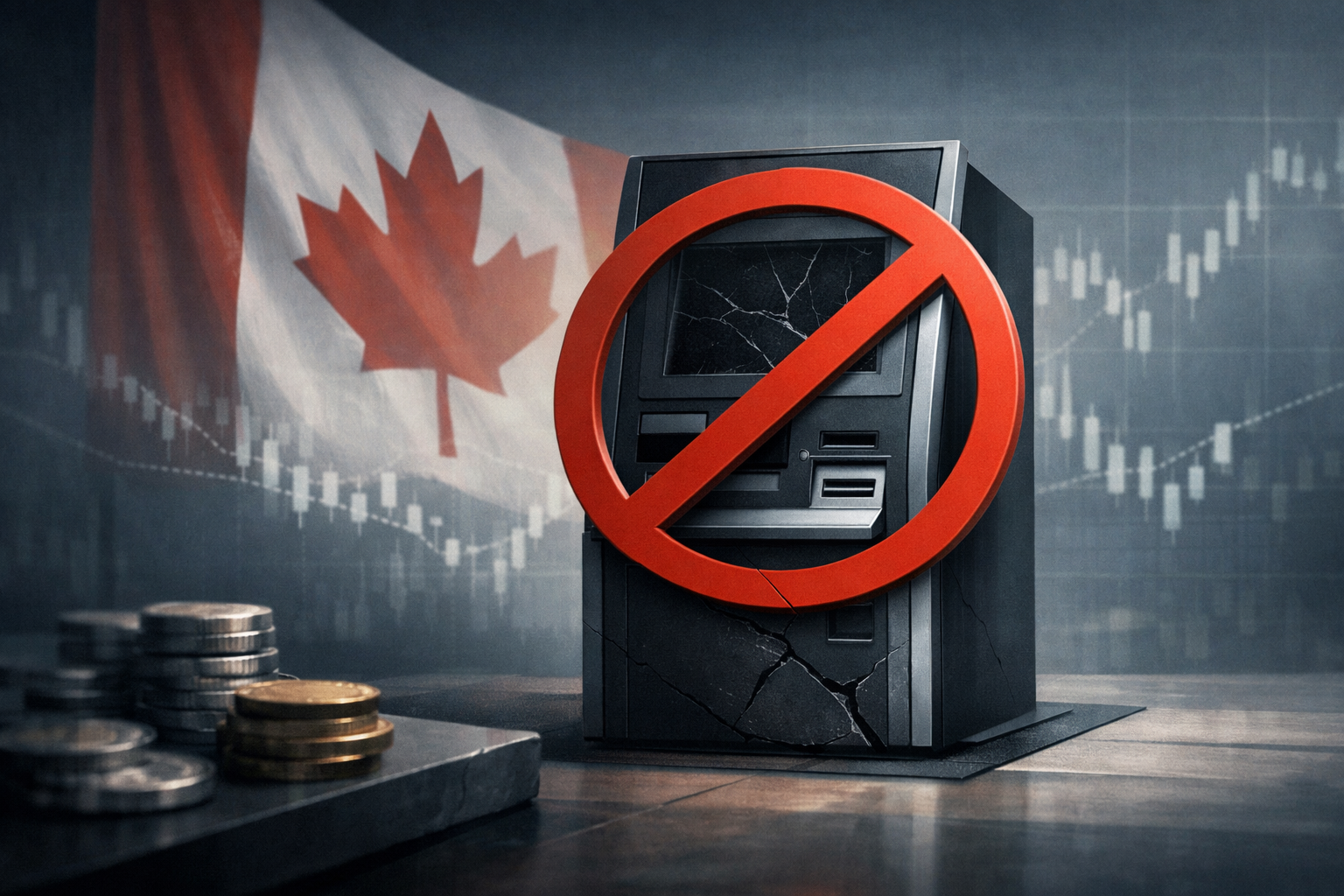
The Canadian federal government has announced plans to ban nearly 4,000 cryptocurrency ATMs nationwide, marking one of the most aggressive regulatory moves against crypto infrastructure to date. Canadian officials say the crypto ATMs have become "a primary tool used by fraudsters to deceive victims and by criminals to launder money."
Meanwhile, Tennessee has become the second US state to completely ban cryptocurrency ATMs, with Governor Bill Lee signing House Bill 2505 into law on 13 April 2026. The legislation takes effect July 1 and positions Tennessee alongside Indiana as the only states to comprehensively prohibit crypto kiosks, following FBI data revealing these machines were linked to over $389 million in fraud losses during 2025.
The market reacted immediately. Bitcoin Depot, which operates a significant portion of Tennessee's 570+ cryptocurrency kiosks and trades on Nasdaq, saw its share price fall 6.9% following the bill's signing. The decline demonstrates how state-level regulation can materially impact cryptocurrency-adjacent businesses.
"Crypto ATMs have given scammers a fast and easy way to target our citizens and scare them into draining their savings," said State Representative Jay Reedy, who co-sponsored the legislation with House Speaker Cameron Sexton. "By eliminating these machines, we're shutting down one of the most common tools used in these schemes."
Tennessee: Fraud Crisis Drives Legislative Action
The ban classifies the installation, operation, or hosting of virtual currency kiosks as a Class A misdemeanor, carrying penalties of up to 11 months and 29 days in jail plus a $2,500 fine. Critically, the law extends liability beyond operators to include property owners and businesses that host the machines.
Tennessee's response emerged from documented fraud cases affecting state residents. A Middle Tennessee law enforcement agency reported nearly $4 million stolen from dozens of residents in scams tied to crypto kiosks, while FBI data showed the national scope of the problem had reached crisis proportions.
Cryptocurrency ATMs, typically located in gas stations and convenience stores, allow users to buy or sell digital assets using cash. Their accessibility and relative anonymity have made them attractive tools for scammers targeting vulnerable populations, particularly older residents. Once victims send cryptocurrency through these machines, recovery is virtually impossible.
Why Is Crypto Down Today? BTC USD Hovers Around $78K With Fear-Driven Caution | Crypto Watch Desk
Canada: Why the Ban Now?
Canada currently has the highest per capita number of crypto ATMs globally, with close to 4,000 machines scattered from Vancouver to Halifax. These devices allow users to deposit cash and instantly convert it to cryptocurrencies like Bitcoin, which can then be transferred to digital wallets worldwide.
The crackdown follows mounting evidence of widespread abuse. A CBC News investigation titled "Feeding the Fraud" exposed how scammers routinely direct victims to crypto ATMs to extract funds, enabling rapid conversion of cash into untraceable digital assets. The report aligned with findings from FINTRAC, Canada's financial intelligence unit, which identified crypto ATMs as central channels for laundering proceeds from scams and other criminal activity in its February 2023 analysis.
Despite Canada's leadership in crypto ATM deployment, the sector has operated largely without specific regulations. While the country imposed strict anti-money laundering rules on crypto exchanges and virtual asset service providers starting in 2020, ATMs remained in a regulatory gray area that allowed their proliferation.
CWD Exclusive: Nischal Shetty On How Close WazirX Is To The First Payout | Crypto Watch Desk