At a glance
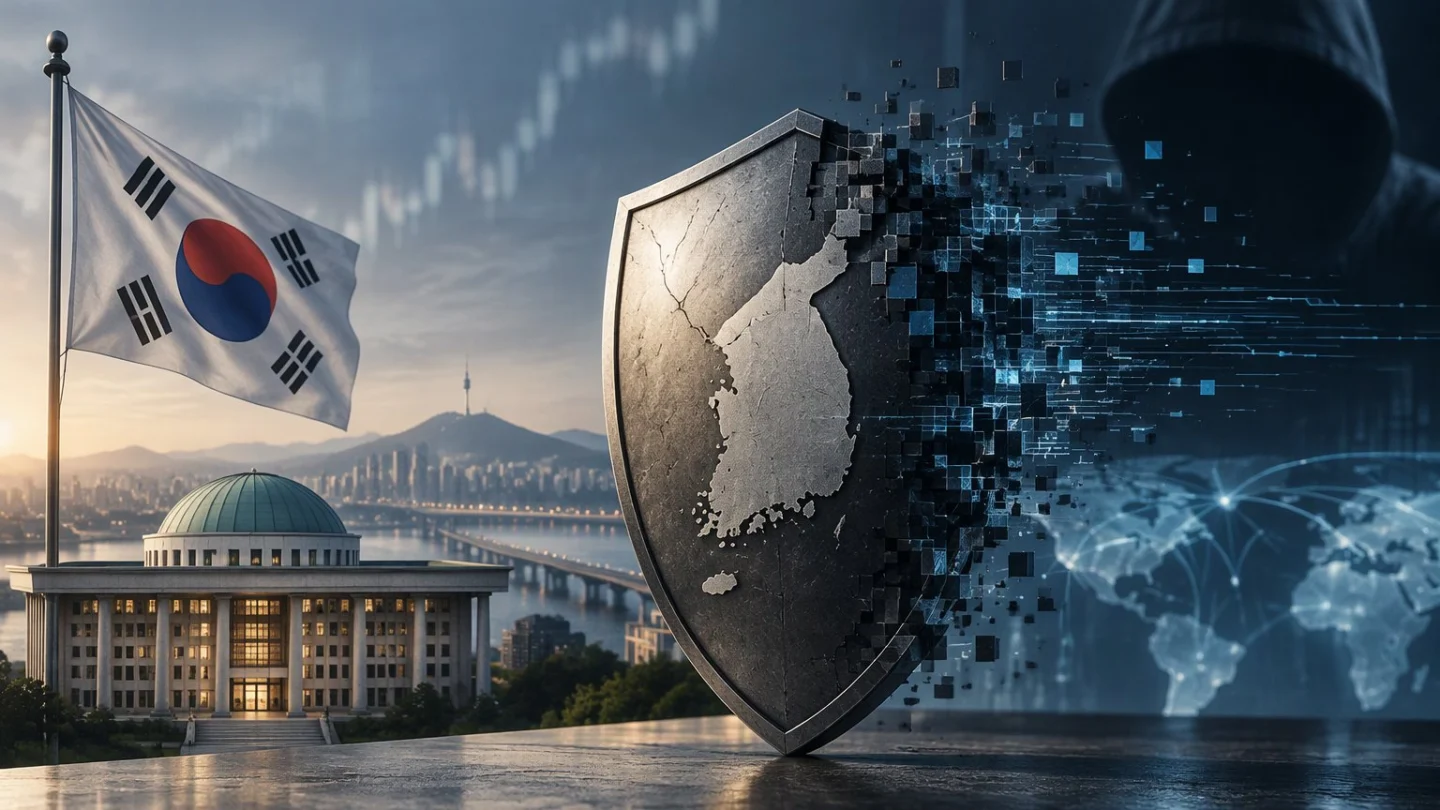
- President Lee Jae Myung told his Cabinet on Tuesday, 3 Nov, to consider a government-wide cybersecurity body covering both public and private sectors, Yonhap reported.
- He cited the $6.3 billion theft from Binance on 29 Oct and a series of breaches at Korean financial firms. No form, budget or timetable for the new body has been announced.
Lee asked officials to “proactively consider the formation of a cybersecurity czar agency” that could act as a control tower for security, according to Yonhap’s English translation of his remarks at the Cabinet meeting in Seoul.
He called for “a comprehensive prevention system”, saying the threats now endanger the economy, national security and people’s everyday lives. Advances in artificial intelligence were making attacks more sophisticated, he said, which showed the limits of a system built on routine inspections and on responding only after breaches. He also told officials to fix weak points at major state institutions and in infrastructure such as telecommunications, energy and finance.
Why now
Lee’s remarks followed hacks at Mirae Asset Global Investments, the crypto exchange Bithumb and Daishin Securities, Yonhap said. He also pointed to the attack on Binance, the world’s largest crypto exchange by trading volume, which the US Federal Bureau of Investigation has blamed on North Korea. Pyongyang has denied involvement.
Citing Binance, Lee urged authorities to spot the signs of attacks early, share warnings and act before damage spreads, The Korea Times reported.
Who does what today
Responsibility is split three ways. The National Intelligence Service (NIS) covers critical public infrastructure, the Ministry of Science and ICT (MSIT) is responsible for most private operators, and the Financial Services Commission (FSC) oversees security at financial firms, The Korea Times said.
Checks are already under way. On 22 Oct the NIS gave a security checklist to more than 2,100 central and local government bodies and asked them to review their own systems, and it expects to finish reviewing public infrastructure by mid-November, the paper reported. The MSIT is checking about 170 major private-sector facilities, including telecoms, online platforms and finance, with results due by the end of the year.
Youm Heung-youl, professor emeritus of information security at Soonchunhyang University, told the paper the government first needs to decide whether it means an agency set up by law or a presidential committee. “What matters most is that it has real authority,” he said.
Context
The FSC has already called in the country’s crypto exchanges over cold-wallet rules after the Binance theft. For how that attack worked, see Binance’s own account of the attack, which traces it to a fake job interview and an internal AI tool.
Why it matters: Korea has one of the world’s largest retail crypto markets, and a single security authority could change who inspects exchanges and how quickly breaches have to be reported.
The next step is for officials to decide what form the body takes. Youm said a new agency could need legislation and political agreement, and that strengthening the coordinating role of the presidential National Security Office was another option.
This article is for information only and is not investment advice.