



What began as a satirical jab at Bitcoin has evolved into one of cryptocurrency's most volatile and closely watched sectors.
Meme coins, digital tokens driven by internet culture, viral moments, and community enthusiasm rather than technical innovation, reached a combined market capitalization exceeding $60 billion during peak cycle highs, fundamentally challenging conventional notions of value in digital assets.
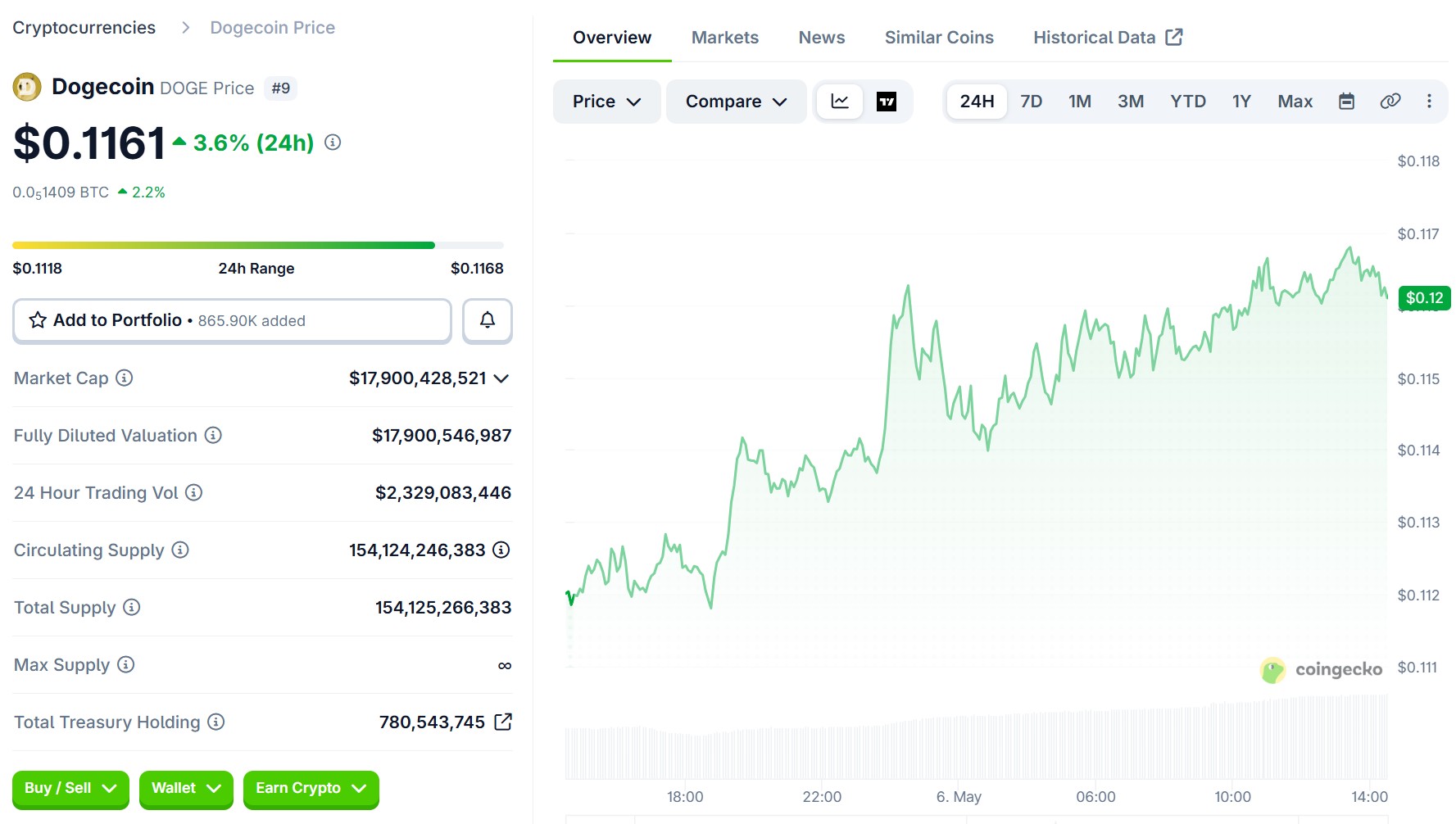
Dogecoin (DOGE), the original meme coin featuring a Shiba Inu dog mascot, remains the sector's dominant force. As of May 2026, DOGE trades at $0.116 with a market capitalization of $18 billion, a remarkable standing for a token created in 2013 as an explicit parody of Bitcoin's serious positioning.
BTC Price Hits 3-Month High: Why Bitcoin ETFs Are Absorbing Supply Above $81,000 | Crypto Watch Desk
The appeal of meme coins rests on a distinct set of mechanics. Unlike traditional cryptocurrency projects built on technical whitepapers and defined use cases, meme coins derive value from social media momentum, celebrity endorsements, and coordinated community activity on platforms like X, Discord, and Reddit.
Low token prices, often fractions of a cent, give retail investors the psychological appeal of owning millions of coins, a sharp contrast to Bitcoin's scarcity narrative. Combined with documented 100–1,000% price movements within days, this creates asymmetric upside potential that attracts risk-tolerant investors seeking outsized returns.
A Sector Built on Community, Not Code
Not all meme coins are created equal. The sector now shows clear market stratification across three tiers:
- Tier One: Dogecoin and Shiba Inu (SHIB) command multi-billion-dollar valuations with established global communities. Shiba Inu has expanded beyond speculation, launching Shibarium, its own Layer 2 blockchain, alongside NFT collections and metaverse projects.
- Tier Two: Tokens including Pepe (PEPE), Floki Inu (FLOKI), Bonk (BONK), and dogwifhat (WIF) have achieved $500 million to $2 billion market caps through specific community narratives and blockchain affiliations.
- Speculative Frontier: Emerging tokens like Wiki Cat (WKC), up 238% in seven days, and Peanut the Squirrel (PNUT), which gained approximately 395% over the same period, represent the highest-volatility end of the market.
Blockchain affiliation has become a meaningful differentiator. Solana-based tokens like Bonk and dogwifhat benefit from the network's low transaction costs and strong NFT culture. Base chain tokens like Mog Coin target emerging Layer 2 ecosystems. This cross-chain diversification has made meme coin adoption a proxy metric for broader blockchain ecosystem engagement.
Risks Regulators and Investors Can't Ignore
Centralized exchanges have accelerated meme coin adoption by rapidly listing high-volume tokens, a strategy that generates trading fees and attracts retail users. The result is a self-reinforcing cycle: listings drive liquidity, liquidity attracts participation, and participation justifies further exchange support.
The meme coin sector's $60+ billion peak market cap is no longer a fringe data point; it represents a measurable share of total cryptocurrency market activity. Whether that capital reflects a democratization of speculative finance or a recurring cycle of retail-driven excess is a question industry observers, economists, and regulators continue to debate.
What the data does confirm: meme coins have permanently embedded themselves in cryptocurrency market structure, exchange strategy, and retail investor behavior. Their trajectory from internet joke to institutional consideration is, at minimum, a case study in how cultural consensus can manufacture financial value at scale.