


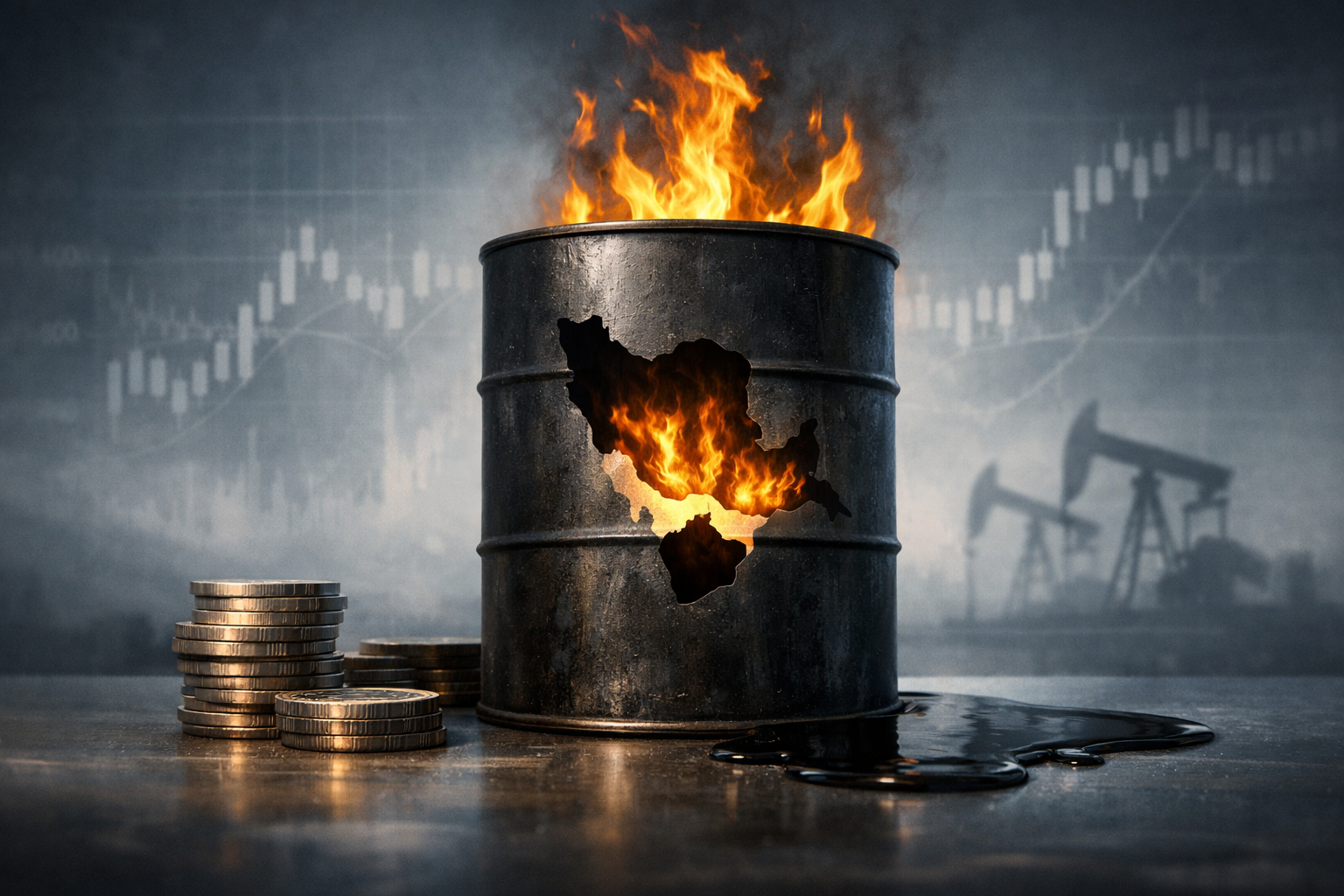
"The Middle East war creates upside risks for inflation and downside risk for economic growth," said European Central Bank President Christine Lagarde, issuing a stark warning this week that financial markets are dangerously complacent about the Middle East crisis.
Lagarde insists that the market is taking the escalating Iran war very lightly, and it threatens years of energy disruptions and persistent inflation pressures.
Lagarde cautioned that oil price volatility and infrastructure damage could fuel inflation far longer than markets anticipate, with the bank's worst-case scenario projecting eurozone inflation hitting 4.4% in 2026.
For Crypto: threat of tighter monetary policy could suppress risk appetite
For cryptocurrencies often viewed as inflation hedges, the situation presents a double-edged dynamic: geopolitical uncertainty typically drives safe-haven flows to Bitcoin and other digital assets, but the threat of tighter monetary policy could suppress risk appetite.
The 2022 Ukraine crisis saw similar patterns, with Bitcoin initially rallying on inflation fears before central bank rate hikes pressured crypto markets alongside other risk assets.
ECB Governing Council member François Villeroy de Galhau cautioned markets against overinterpreting potential rate moves, calling talk of imminent hikes "premature." Nonetheless, the central bank's emphasis on monitoring wage growth, inflation expectations, and energy markets signals readiness to act if conditions deteriorate.
As Lagarde emphasized in earlier March remarks, the ECB will take "necessary measures to keep inflation under control." With Middle East tensions showing no signs of quick resolution, the path ahead remains highly uncertain—and markets may need to recalibrate their optimism accordingly.
Rates Hold Steady Amid Growing Uncertainty
The ECB's Governing Council unanimously held key interest rates unchanged for the fifth consecutive meeting in March 2026, keeping the deposit facility rate at 2%, the main refinancing rate at 2.5%, and the marginal lending rate at 2.75%.
Despite the hold, the central bank revised its 2026 inflation forecast upward to 2.6%, compared to previous projections, with expectations for inflation to ease to 2.0% in 2027 and 2.1% in 2028. The baseline scenario masks significant tail risks: in a severe case of prolonged supply disruptions, inflation could surge to 4.4% next year.
"We are determined to ensure that inflation stabilizes at our 2% target in the medium term," Lagarde said at the post-meeting press conference, while emphasizing the bank's data-dependent approach.
"We are not pre-committing to a particular rate path."
Energy Shocks and 'Ripple Effects'
The conflict's impact is already visible in energy markets. Headline inflation climbed from 1.7% in January to 1.9% in February 2026, driven primarily by energy price jolts. Oil prices have experienced unprecedented volatility, with swings of approximately ±30% in a single day, according to Lagarde's March 24 podcast interview.
"The Middle East war creates upside risks for inflation and downside risk for economic growth," Lagarde explained, noting that disruptions could create "ripple effects" within months through shipping costs, insurance premiums, and supply chain bottlenecks.
In an interview with The Economist, Lagarde warned that damaged energy infrastructure could extend disruptions for years, contrasting sharply with market expectations for rapid normalization. ECB Vice President Luis de Guindos reinforced this concern on March 26, warning that escalation could trigger "systemic stress" in financial markets.