



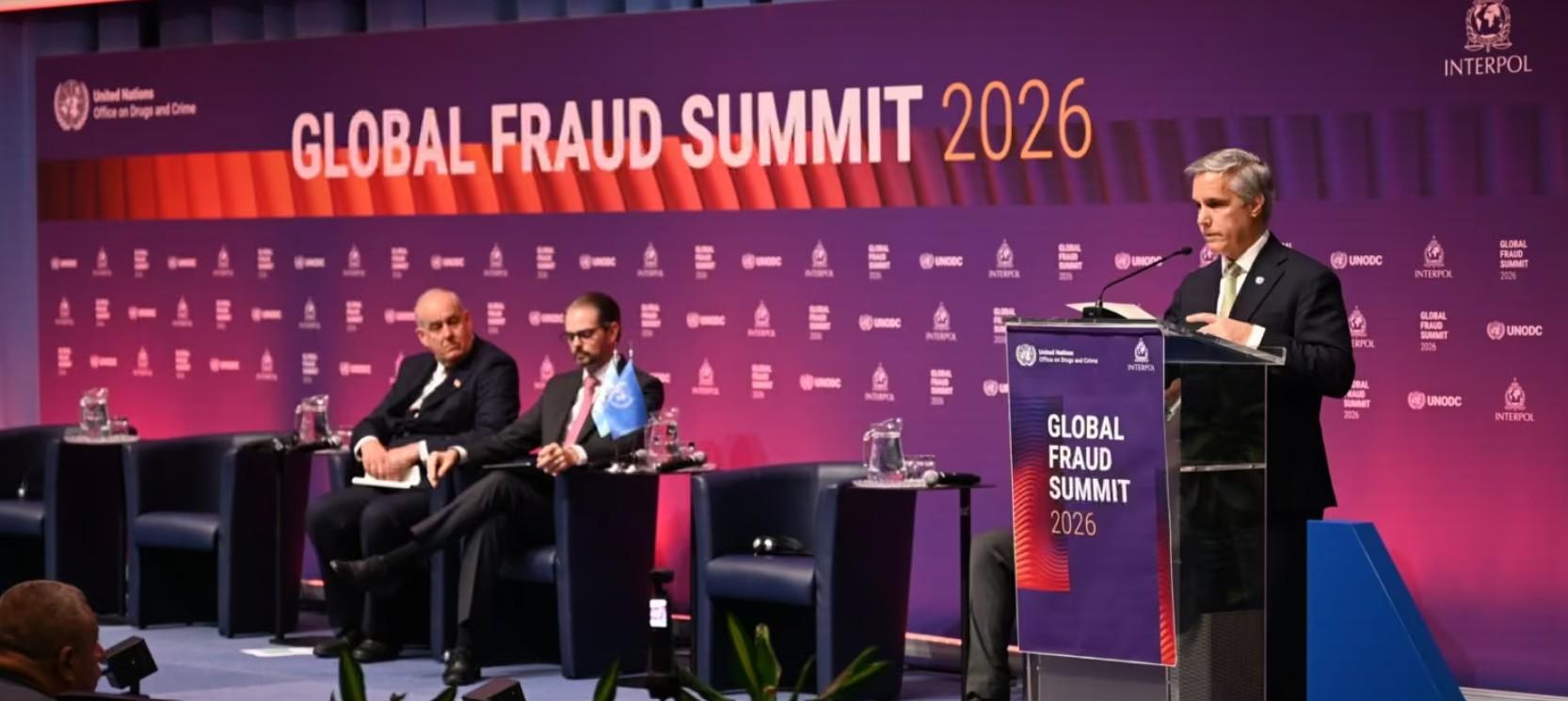
Artificial intelligence-enabled cryptocurrency scams are generating 4.5 times more profit than traditional fraud schemes, extracting an average of $3.2 million per operation compared to just $719,000 for non-AI scams, according to findings presented at the Global Fraud Summit 2026. The summit, hosted by blockchain analytics firm Chainalysis in collaboration with INTERPOL, the UK's National Crime Agency, and Ghana's Economic and Organized Crime Office, revealed an escalating crisis as organized financial crime reaches unprecedented sophistication.
By leveraging AI to contact, manipulate, and manage vastly larger numbers of victims simultaneously, scammers have achieved unprecedented scale and efficiency.
Illicit Activity Reaches $154 Billion in 2025
The magnitude of crypto-enabled crime in 2025 reached historic levels. Illicit crypto addresses received at least $154 billion throughout the year, a 162% year-over-year increase driven primarily by a 694% surge in value received by sanctioned entities, which alone totaled $104 billion.
Cryptocurrency now appears in virtually every profit-driven crime category, from ransomware operations and scams to human trafficking networks and terrorist financing. This ubiquity reflects how thoroughly digital assets have been integrated into the operational infrastructure of transnational organized crime.
Explore: What is Siren Crypto? A Report By Crypto Watch Desk
Chinese Money Laundering Networks Dominate Ecosystem
Chinese money laundering networks (CMLNs) emerged as dominant players in the illicit on-chain ecosystem in 2025, offering specialized services including laundering-as-a-service and support for everything from fraud to North Korean hack proceeds and sanctions evasion.
The Huione Group exemplifies this trend, having processed over $98 billion in cryptocurrency inflows between August 2021 and January 2025, including over $4 billion in confirmed illicit proceeds. Such operations represent a qualitative evolution in how traditional organized crime has adapted to blockchain technology.
Coordinated International Response Intensifies
International regulatory bodies significantly stepped up coordinated sanctions efforts in 2025. The U.S. Office of Foreign Assets Control (OFAC), the European Union, the UK's Office of Financial Sanctions Implementation (OFSI), and allied Western nations all designated crypto actors and infrastructure tied to ransomware, state-linked evasion networks, and sanctions-circumvention services.
The summit emphasized that stronger verification requirements for cryptocurrency platform transactions represent a critical component of the response, likely increasing compliance costs for exchanges and custodians while creating competitive advantages for platforms implementing sophisticated fraud detection mechanisms.
Blockchain Transparency as Investigative Tool
Summit participants highlighted a counterintuitive advantage: blockchain transparency can be transformed into a significant investigative asset through sophisticated on-chain analytics. Chainalysis representatives demonstrated how blockchain data enables investigators to distinguish between criminal groups based on their unique on-chain signatures and laundering patterns, allowing law enforcement to track and attribute illicit activity with unprecedented precision.
The ransomware landscape in 2025 presented a paradox, while claimed attacks increased and median ransom sizes rose, total on-chain payments remained relatively stagnant. According to Corsin Camichel, founder of eCrime.ch,
We're seeing a structural shift in targeting: fewer large, headline-grabbing intrusions and more volume focused on small and medium enterprises.
"However, Chainalysis' data shows payments trending downward despite an all-time high in public claims. That divergence is important. It suggests attackers are working harder for diminishing returns."
The Global Fraud Summit 2026 reaffirmed a critical consensus: fraud is organized crime and a systemic financial risk that can only be addressed through coordinated, data-driven action across borders and sectors. As cryptocurrency continues integrating into mainstream finance, the sophistication of both criminal operations and law enforcement responses will continue to escalate.